A biotech website brief should explain which decisions the site needs to support, what the company can substantiate and who can approve publication. “A modern website with ten pages” does not tell an agency whether it is organising an established service, presenting a research platform or preparing a company for new partnership conversations.
Moving an existing AEM website? Our AEM to WordPress migration budget guide for 2027 separates content, assets, review and acceptance so suppliers can price the same migration work.
For a 2027 project, give suppliers the same audience, content and review assumptions before comparing proposals. This original briefing template is designed for scientific, business development and communications teams working together. It helps define the website commission; it does not provide scientific, clinical or regulatory advice.
Keep this brief beside the biotech website cost guide for 2027. The brief establishes the work. The budget then needs to account for content, design, development, migration, review and continuing ownership.
Start with the conversation the website should make possible
Choose the next conversation, rather than starting with the menu. A potential partner may need to understand the platform and whether it fits a research problem. A scientific reader may want methods, references and the limits of a claim. An investor may need a coherent account of the company’s focus, public milestones and leadership.
Write a task for each priority audience and identify the next useful action. Those actions might be reading the relevant publication, exploring a partnership enquiry or finding approved company information. Not every visit needs to become a sales form submission.
State the company’s stage and the current public-information boundary. A new platform with limited published material needs a different content plan from a company with several programmes and an extensive publication library. Avoid asking the design team to solve missing evidence with more dramatic language.
Build an audience-and-evidence map
| Reader | Question to resolve | Material to prepare | Useful next step |
|---|---|---|---|
| Scientific peer | What does the approach do, and what supports that account? | Approved explanation, references and limitations | Read the source or contact the relevant team |
| Potential partner | Where might this platform fit our problem? | Applications, collaboration scope and approved evidence | Start a scoped partnership enquiry |
| Company researcher | What is publicly established about the business? | Company facts, leadership and dated milestones | Find the appropriate corporate information |
| Prospective colleague | What work and team would I be joining? | Accurate role information and team context | Reach the correct application route |
This is a planning example, not a requirement to disclose confidential information. Replace the rows with your actual audiences and approved materials. A smaller map that reflects real decisions is more useful than an impressive list nobody can maintain.
Inventory the source material before writing the sitemap
List public company facts, platform descriptions, programmes, publications, presentations, images and existing website content. For each item, record its owner, approval state, source, language and next review date where applicable.
Flag gaps explicitly. A publication title may be available while the accompanying summary still needs review. A diagram may be visually finished while its labels remain provisional. The project estimate should distinguish organising approved material from producing new explanatory content and obtaining approval.
Do not include private research files in an open enquiry form. An initial public-site review can establish the scope; controlled access to further material can then be agreed with the responsible team. The brief should name that dependency without reproducing sensitive source data.
Separate the scientific statement from its visual treatment
For every important diagram or animation, state the communication task, approved meaning and reviewer. Describe whether it explains a workflow, a platform relationship or a concept. Then identify the visual production needed: illustration, interface, motion or a combination.
A visual can make an explanation easier to follow. It cannot establish the evidence behind it. Ask who checks labels, sequence, scale, terminology and the relationship between a caption and the claim beside it.
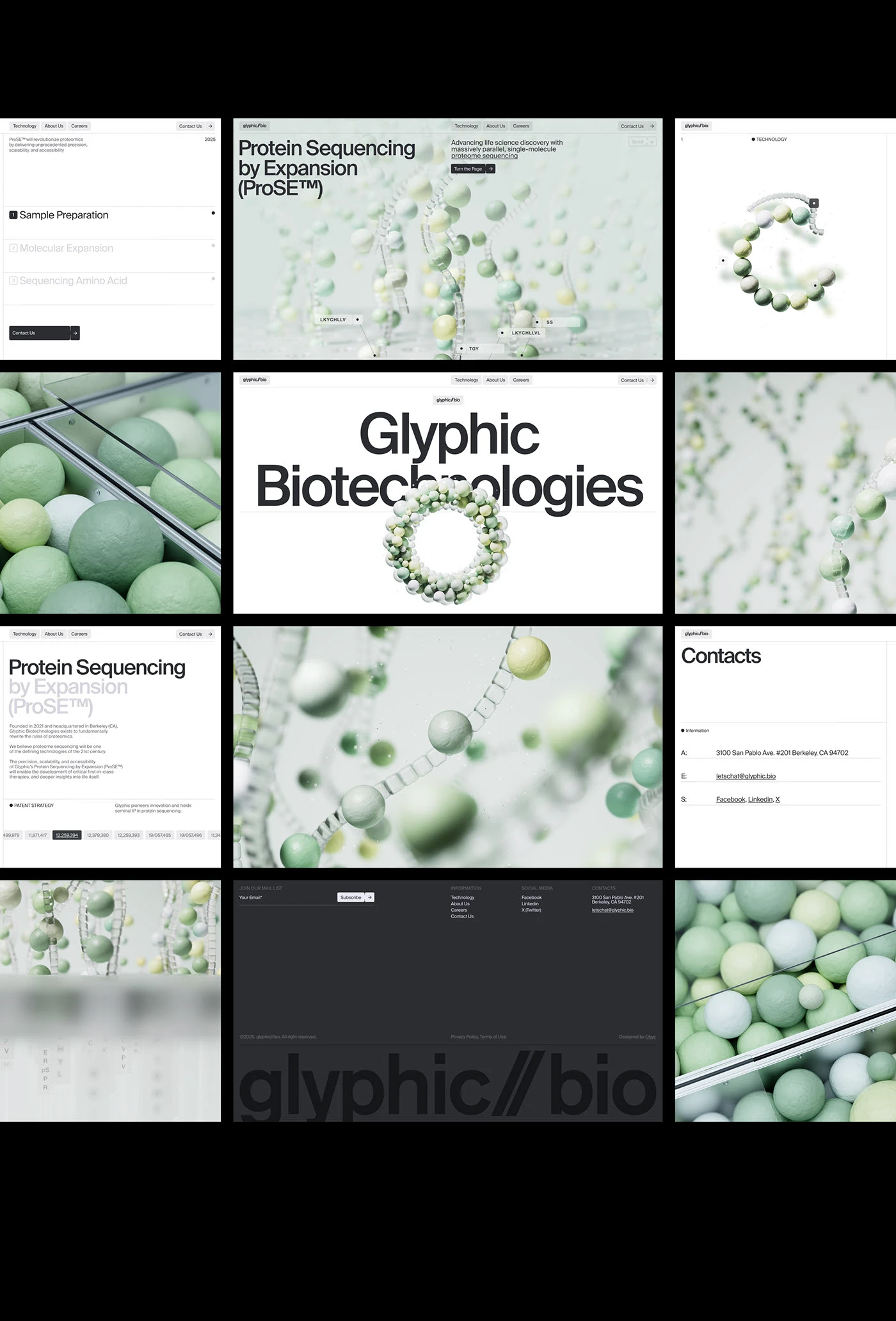
Use a reference board to discuss hierarchy, the relationship between explanation and image, and how sections lead into each other. Record the decision you want to borrow as a design principle. The creator’s portfolio does not provide your scientific source material, project price or acceptance criteria.
A scientific component specification you can hand to a designer
Try one component before commissioning the whole visual system. This fictional SCI-01 record describes a platform-workflow illustration; the four labels are placeholders, not an account of a real technique. Replace the source and role names with your company’s approved material and named reviewers.
- Reader and purpose
- A potential partner should understand the order of four stages and find the explanation supporting them.
- Meaning and source
- Draft labels: Input → Preparation → Analysis → Review. SCI-SRC-01, version A, is a placeholder for the approved source record. The scientific reviewer owns its wording, caption and limitations.
- Content to deliver
- A static diagram, editable labels, a visible caption and a text equivalent reading the same stages in the same order. The source link must lead to the actual approved reference selected by the company.
- Behaviour and variants
- All four stages remain understandable on a narrow screen and without motion. If animation is commissioned, reduced-motion and static versions retain the same information. Each published language has its own reviewed labels and caption.
- Editing and ownership
- The web editor updates the approved record; the scientific reviewer approves meaning and revisions. The design team owns the composition, and development owns its implementation and reuse.
Acceptance record for SCI-01
- Scientific reviewer: compare the four labels, order and caption with the identified source version. Record accepted, returned or awaiting information, with the reason.
- Editor and developer: on the review environment, change one approved label and inspect every place using the component, including available translations. Record the expected and observed result.
- Design and accessibility reviewer: check the narrow-screen layout, text reading order, source link and static or reduced-motion presentation. Record any information lost and the person responsible for correction.
This is a proposed acceptance protocol, ready to assign and review. Its rows are not completed test results. Include the component and its review work in the proposal so illustration, implementation and approval all have an owner.
Decide what needs a page and what needs a reusable record
A platform, programme, publication and team member have different fields and maintenance needs. Define those records before treating every content item as an independently designed page. A reusable publication entry can support several audience journeys while retaining one approved source of its facts.
List the relationships: which publication supports an explanation, which programme belongs to a platform and where a reader should find the relevant contact. Ask how a change in one record reaches the places that display it.
The biotech website design references for 2027 can help discuss the presentation. The brief must still state your own content model, permissions and editorial responsibilities.
Use the platform story to test navigation
Ask a reader to move from a company-level introduction to an explanation and then to supporting material. Can they tell which question each page answers? Can they return to the wider context without starting again?
The 1910 Genetics presentation is useful as a visual discussion point for platform storytelling. Keep the external credit with the reference and test your own reader task rather than assuming the same structure fits every biotech company.
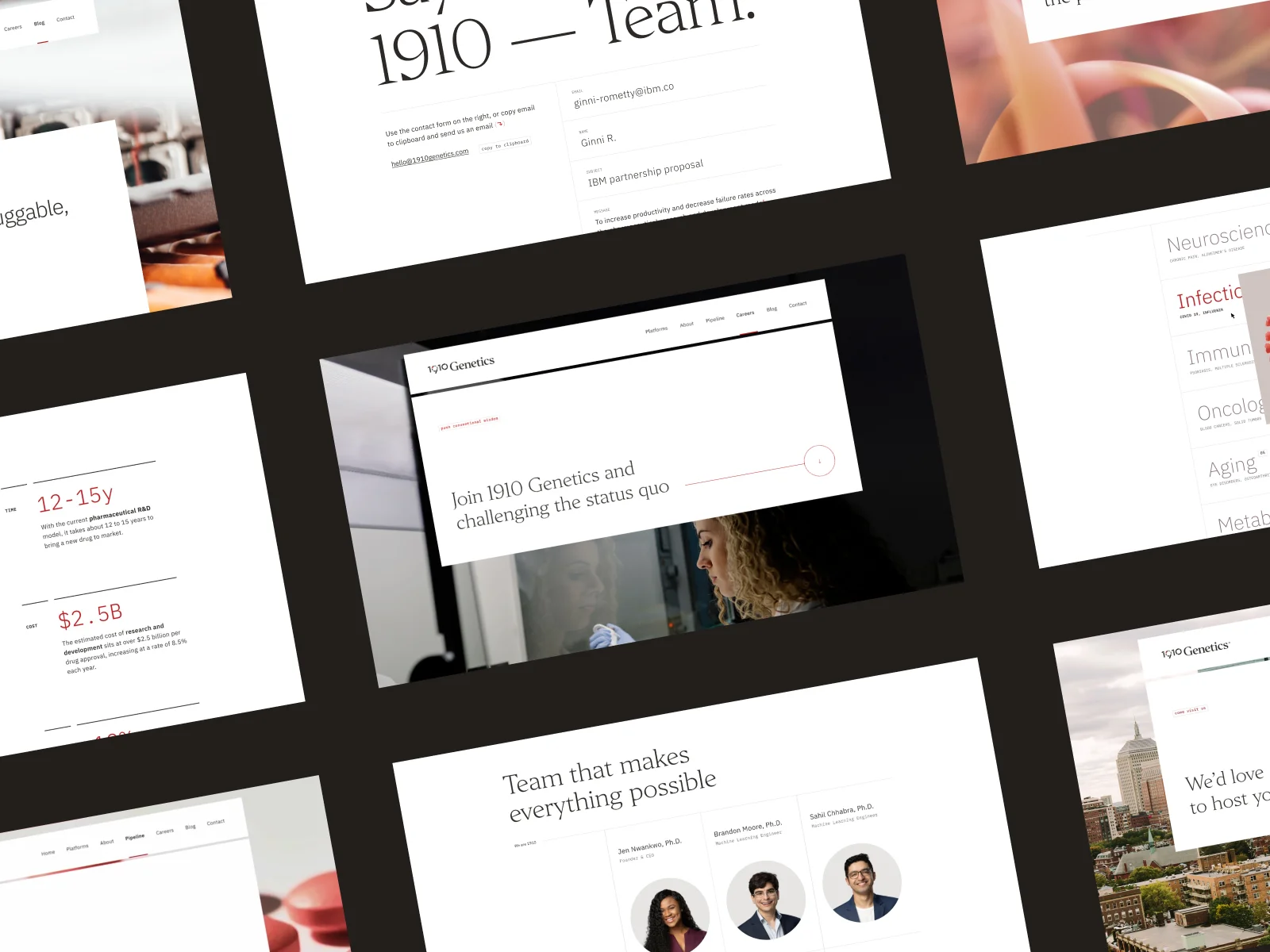
For the brief, write a small set of navigation tests: find a platform explanation, identify its supporting reference, understand the approved programme information and reach the correct enquiry. Use representative readers and record where the wording or route becomes unclear.
Make review a workflow with owners
Name the person responsible for scientific accuracy, corporate facts, brand treatment, translations and final publication. Some roles may be held by the same person. They still need explicit decisions and a route for resolving conflicting feedback.
Define the review unit. Teams might approve a page, a reusable component, an illustration or a structured record. Record how revisions are tracked and how an approved change affects related pages. A screenshot in an email thread is a difficult long-term source of truth.
State who can publish, withdraw or replace time-sensitive content. The website team implements the agreed workflow; the appropriate company reviewers determine what may be said. A content-management system cannot make that judgement on its own.
Include languages and accessibility in the content brief
Identify the language in which each source is approved and the markets that need an adapted version. Allocate terminology review, translation and final sign-off. A phrase that reads well in a scientific explanation may need a different introduction for a business audience in another language.
List the text required alongside visual work: captions, meaningful alternatives, transcripts or explanations where relevant. Keep important information available in a usable form beyond an image or animation. Ask how the same content works when motion is reduced or a diagram cannot be seen.
Decide how language equivalents are linked and what happens when a translation is unavailable. A link labelled as an article translation should take the reader to the equivalent published article, rather than silently sending them to the homepage.
Give migration its own inventory
Collect existing URLs, valuable documents, publication links and enquiry routes. Record which items remain, change, merge or retire, with the reason and intended destination. A redesign should not casually remove the paths people already use to reach useful information.
Include redirects, canonicals, language relationships, document replacement and checks after release. Identify which historical facts need to remain dated. Keeping an evergreen explanation and a genuinely distinct annual planning guide can be sensible; changing the year alone is not a migration strategy.
Assign ownership for the final content freeze and any changes between test migration and launch. Decide who compares the source inventory with the published result. That work should appear in the proposal, not materialise as an unpriced final-week task.
Ask suppliers to price the same workstreams
Separate discovery, content organisation, scientific visual production, interface design, CMS implementation, migration, testing and handover. Identify what your team supplies and which work requires an external specialist.
Request assumptions and acceptance evidence beside each workstream. If a supplier excludes translation, explain who will provide it and where review sits in the schedule. If an animation is optional, keep it separate from the work needed to publish the approved explanation.
Use the biotech agency selection questions to discuss delivery with the people who would actually do it. A proposal becomes easier to compare when the same material and the same dependencies sit behind each total.
Make the launch dependencies visible
If the website supports a conference, partnership announcement or another dated event, identify what must be approved before that date. Separate essential launch content from material that can follow. List the reviewers who will be available and the time they need to assess a meaningful version.
Include translation, scientific illustration, source-data corrections and technical access in that schedule. A finished interface cannot remove a dependency on an unapproved platform description. Ask the supplier to show the critical decisions and the effect of delayed inputs, so the launch conversation is based on the actual work.
Turn the brief into a small acceptance pack
- Reader tasks: named journeys with the information and next action expected.
- Content checks: approved facts, references, captions and record relationships.
- Editorial checks: a reviewer can revise the intended record without breaking related pages.
- Technical checks: public URLs, language equivalents, redirects and essential content behave as agreed.
- Enquiry checks: a permitted test reaches the intended team with useful context.
- Handover: named owners, administration guidance, access and a list of unresolved decisions.
Prepare the expected result before reviewing the finished screens. A page looking right is useful evidence of presentation. It does not verify the content workflow, migration or delivery of an enquiry.
The brief to send an agency
Package the audience map, approved-source inventory, content model, visual requirements, review owners, languages, current URLs and acceptance tasks. Add the intended launch context, internal availability and budget constraints. Where a decision is unresolved, mark it clearly and ask how discovery will resolve it.
There is no need to make the document look like a procurement department’s annual report. A short brief with clear evidence and responsibilities is a better starting point than forty pages of adjectives. Give the supplier enough substance to ask useful questions.
Can an agency write the science for us?
Define writing, editing and visual production separately from scientific approval. CODE GxP structures and presents material your responsible reviewers validate; clinical and regulatory strategy require the appropriate expertise.
Should we choose the CMS first?
Start with the records, review needs, languages and operating team. Then assess platform fit against those requirements. A platform name does not settle the content and approval work.
What makes the first estimate useful?
Named deliverables, representative inputs, explicit exclusions and a bounded next step for missing evidence. A precise total based on undefined content is not necessarily a reliable estimate.
For a proposal around those decisions, discuss your biotech website brief with CODE GxP. Bring the public material and the questions your next partner, researcher or colleague cannot answer today.